Your best opportunity is under $10K
💰 48.7% of creators earn under $10K/year. Budget chases the scarce top 5.7% while the largest, least contested tier gets ignored, Creative iteration should start from proven signals, and more!
Welcome to a space where every edition delivers insights, strategies, and inspiration to fuel your advertising brilliance. 🤯
💰 Almost Half of Creators Earn Under $10K a Year. That's Your Best Roster Opportunity.
Roughly 48.7% of creators earn under $10,000 annually from their content work, another 45.6% earn between $10,000 and $100,000, and only 5.7% clear six figures.
Most brand attention and budget gravitates toward that top 5.7%, the recognizable names with the biggest followings, while the much larger middle tier, creators making real, sustained income without celebrity-level reach, gets treated as a fallback rather than a deliberate strategy.
That allocation pattern misses where the actual leverage sits. The top tier commands premium rates because demand for that small pool is high relative to supply, meaning a brand competing there is competing hardest for the scarcest, most expensive inventory.
The middle tier, creators earning a meaningful but not celebrity-level income, is larger, less contested, and often producing content with stronger engagement relative to cost precisely because it hasn't been bid up the same way.
Map your current roster against these three tiers, not just against follower count
Follower count and income tier don't always align cleanly, and a roster built purely around reach numbers can end up concentrated in the expensive top tier without anyone deciding that allocation on purpose.
Pull your current active creator roster and estimate where each partner likely sits in this income distribution based on your own rate data and what's publicly known about their broader work.
A roster heavily weighted toward the scarce top tier is paying premium prices for the most contested inventory in the market.
Build a deliberate strategy for recruiting from the middle tier specifically
The middle 45.6% represents the largest pool of creators making real, sustained income from their work, deep enough to support genuine roster scale without the acute competition for attention that defines the top tier.
Set a specific target for how much of your roster should come from this middle tier rather than treating it as wherever you land after failing to book top-tier names.
A roster built deliberately around this tier can be larger, more diverse in style, and less expensive per relationship than one chasing scarce top-tier availability.
Treat the bottom tier as a genuine discovery pipeline, not dead weight
The 48.7% earning under $10,000 includes creators still building an audience and skill level, some genuinely talented and simply early, priced accessibly precisely because the market hasn't caught up to them yet.
The catch is that finding them takes volume. You're testing a lot of unproven people to surface a few good ones, and that math only works if sourcing and testing move fast enough to fit inside a campaign window.
Which is why this is an October problem, not a November one. Top-tier availability dries up first as Q4 approaches, and a brand that starts looking late ends up paying peak rates for whoever's left instead of having tested its way to three middle-tier creators who convert.
That's the specific thing worth getting outside help on, because the answer depends entirely on your category. Who's actually available at the tier you're targeting, at what rates, with what turnaround, is not something a benchmark tells you.
Book a free strategy call with Insense and they'll map creator availability in your niche, plus $200 toward your first campaign. They run creator sourcing for Il Makiage, Quince, Huda Beauty, and Monster Energy.
The scarcest tier gets the most attention. The largest, least contested one is where the actual roster-building opportunity is sitting.
Together with Billo
What Meta’s Changes Mean for Your Next Campaign
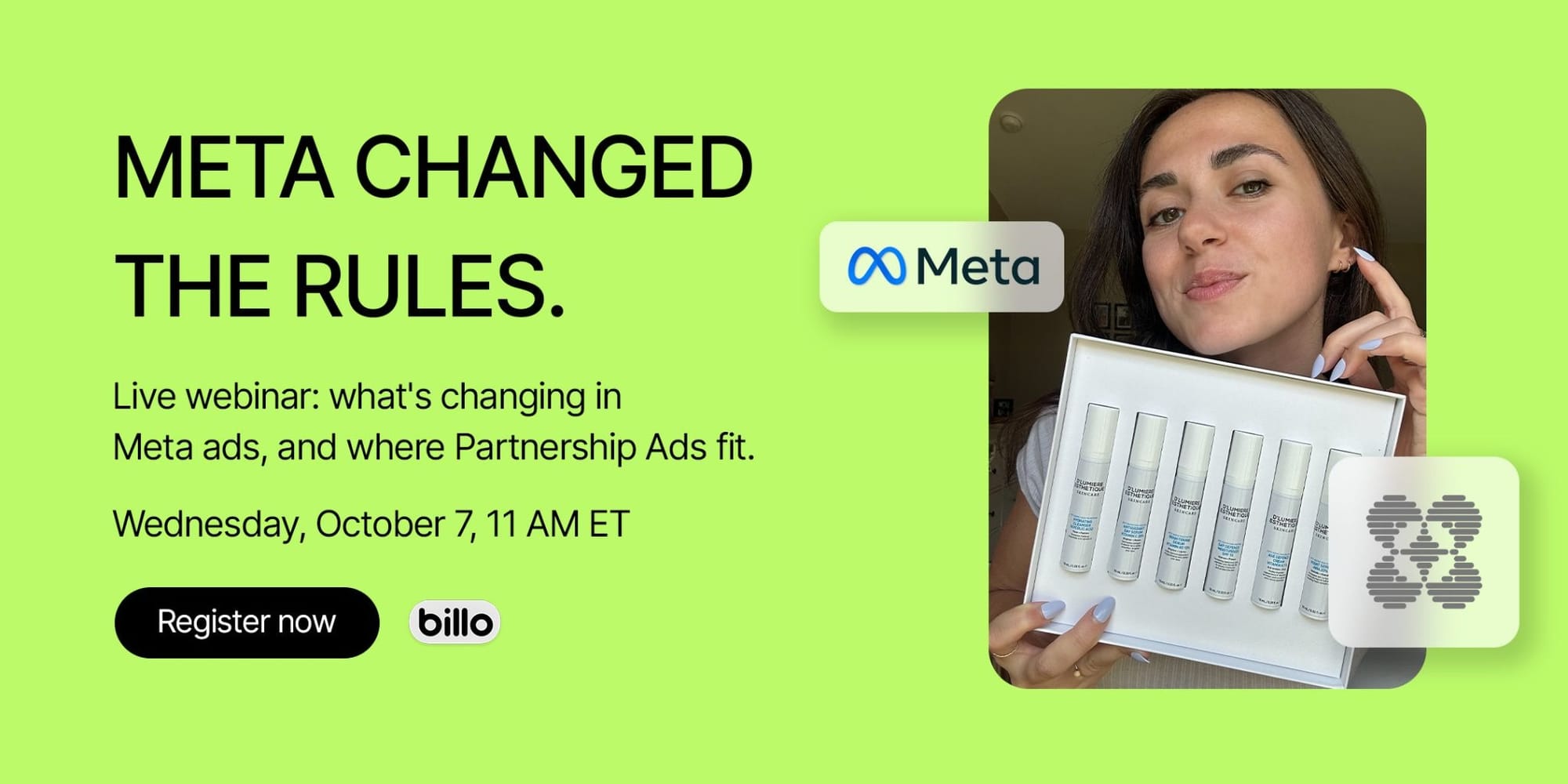
Still running the Meta setup that worked six months ago? Your next creative test could be paying for assumptions that no longer hold.
Before you put more budget behind it, understand what’s changed and where creator-led Partnership Ads fit.
On October 7 at 11:00 AM ET, join Donatas Smailys, CEO of Billo, for a free 60-minute live session to:
- See Meta’s Partnership Ads data and understand where creator-handle ads could earn a place in your account.
- Improve your creative testing with Curtis Howland, VP of Marketing at Misfit Marketing, with $100M+ in Meta spend managed.
- Hear directly from Reyna Baker, Partner Manager at Meta, about platform changes that could affect how you spend your budget.
You’ll leave knowing where your Meta setup needs to change and how to put creator-led ads to work before committing more budget.
Can't attend the session live? Register anyway, and you’ll get the recordings in 24 hours.
⚡Creative iteration should start from proven signals
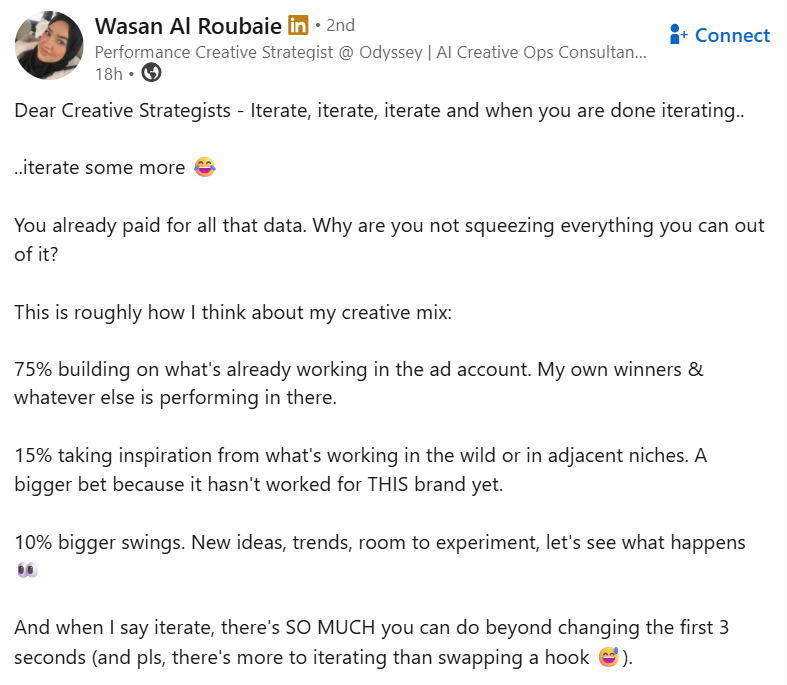
This framework argues that most creative output should build on ads already showing traction. Instead of constantly starting from scratch, winning messages can be extended into new formats, creators, visuals, and executions with a clear hypothesis behind each change.
Why it works: Iterating from proven angles reduces guesswork and makes each test more informative. One winning idea can generate multiple new assets while preserving the message that already resonates, improving creative efficiency and hit rate.
Where it needs balance: Too much iteration around existing winners can narrow exploration and eventually create fatigue. Brands still need room for fresh concepts and unexpected ideas, so the strongest mix balances proven extensions with deliberate experimentation.
🎥 Reel of the Day
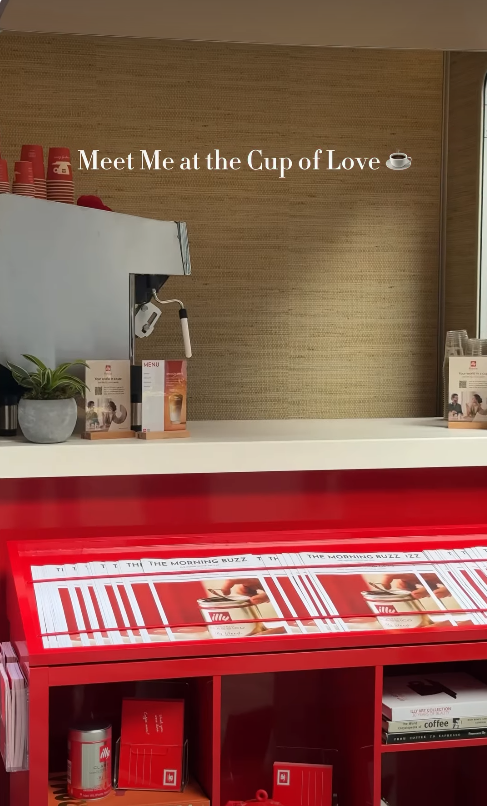
What Works:
1. Sell The Destination - The “Meet Me at the Cup of Love” hook sells an experience before coffee. This experiential marketing framing gives people a reason to visit beyond simply buying illy.
2. Create A Branded World - The repeated illy red, newspapers, cups and Cup of Love graphics make every frame recognizable. Strong visual branding builds recall without requiring constant logos or product close-ups.
3. Show People Using The Space - Instead of filming an empty installation, the reel shows coffee, conversations, food and seating being enjoyed. This social proof helps viewers imagine themselves participating in the activation.
For a brand activation reel, document the journey rather than just the setup: arrival, branded details, interactive touchpoints, people participating and the product experience viewers can come visit themselves.
Advertise with Us
Wanna put out your message in front of over 40,000 best marketers and decision makers?
Thanks for reading this edition! Keep pushing boundaries, testing ideas, and staying inspired. See you in the next edition with more ways to ignite your marketing success. 🥰