Curb your BFCM returns now!
💪The BFCM Creative Brief Being Written This Month Will Determine Your January Return Rate
Welcome to a space where every edition delivers insights, strategies, and inspiration to fuel your advertising brilliance. 🤯
💪 Curb your BFCM returns now
Brands that had a returns problem last January are writing this year's BFCM brief right now with the same model, the same fit context, and the same gap between who appears in the creative and who places the order. The return problem will repeat because the creative decision that causes it is being made in June without anyone naming it.
1. Recognise That Most BFCM Returns Are a Creative Problem, Not a Logistics One
BFCM purchase pressure moves buyers who carry higher fit uncertainty to begin with. When the creative does not show the product on a body that matches theirs, fit expectation is set wrong before the package ships. The return is decided at the moment of purchase, not when the product arrives.
Return rates in post-BFCM periods average above 35% in fashion. Processing returns during January peak costs three to five times a standard return because logistics is already overwhelmed by outbound BFCM volume. The margin damage is not in individual transactions. It is in the concentration of them hitting simultaneously.
2. Recognise Why June Is the Actual Production Window, Not August
The shoot window for BFCM creative assets closes in August for brands using traditional photography. That is eight weeks from now. Creative needs to be in market by September to accumulate performance data before BFCM spend scales in October. September is ten weeks away.
Starting the representation audit now means assets are generated and in early testing before the shoot window closes. Brands that begin briefing representation-matched creative in August are building for the cycle after this one, not for the campaign that matters.
3. Build the Brief From Last Year's Returns Data
Cross-reference your highest-return SKUs from last BFCM with exchange data to identify which segments returned most and which cited fit as the reason. Those segments are the brief.
Dreem generates what that brief calls for from one product image: model shots across 400+ virtual talents covering every body type, age, ethnicity, and size, plus video for PDP, paid, and organic.
That creative, started now and tested through September, enters BFCM with real performance data behind it. The January return rate is a decision being made this month.
Together with Stack Influence
This Channel Delivers 5X ROAS and Gets You to Page One in 60 Days
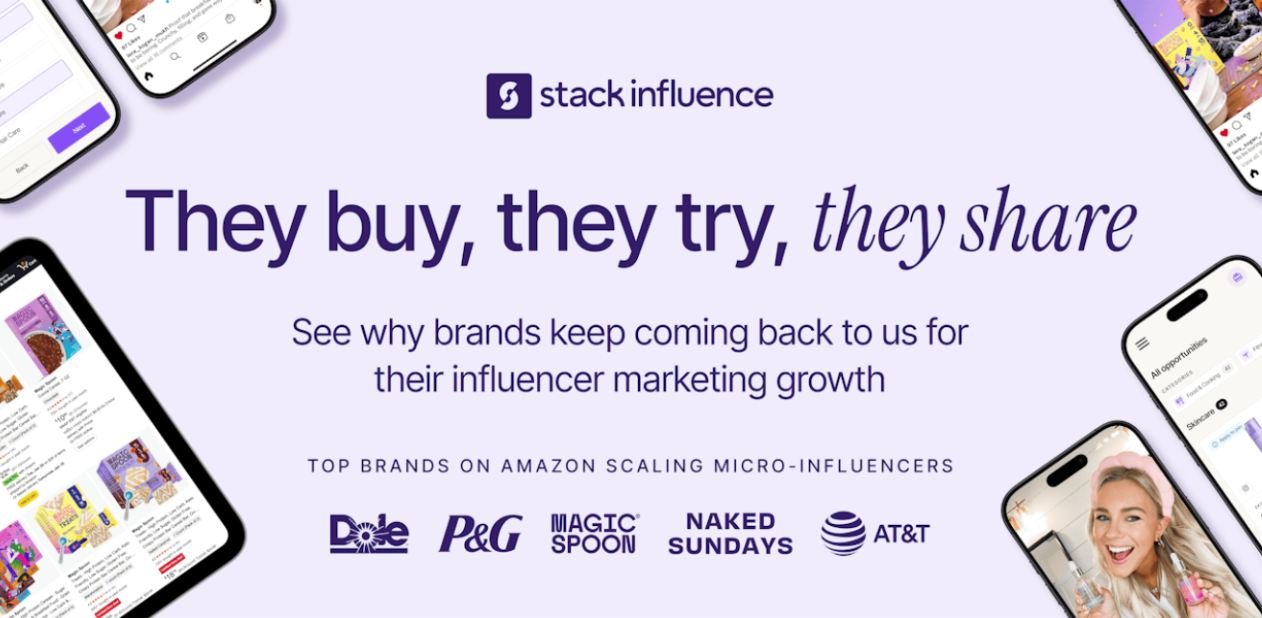
Ancient Nutrition had a real product. Strong formulation. Decent listing. What they didn't have was sales velocity that the algorithm could work with. So they stopped throwing money at bids and started sending product to micro-influencers instead.
The result: 15x sales growth, a 7.2x rank boost, all from creators their customers actually trusted.
Stack Influence automates the motion. Their AI matches your brand with creators from a network of 11M+ micro-influencers, and you simply pay them only with your products, so every dollar maps to a real purchase and a real piece of content.
- Neutralyze hit $233K in revenue at a 3.8x ROI on product seeding alone
- Lenny & Larry's activated 1,560 creators and hit 11x monthly sales
- Aunt Fannie's gave free product to 189 creators, and 8x'd Amazon sales in 90 days
Now you can run the same motion, and save 10% in your first campaign if you sign up this week.
Book your free strategy call today.
⚡Scale Ads Based on Statistical Confidence, Not Gut Feeling
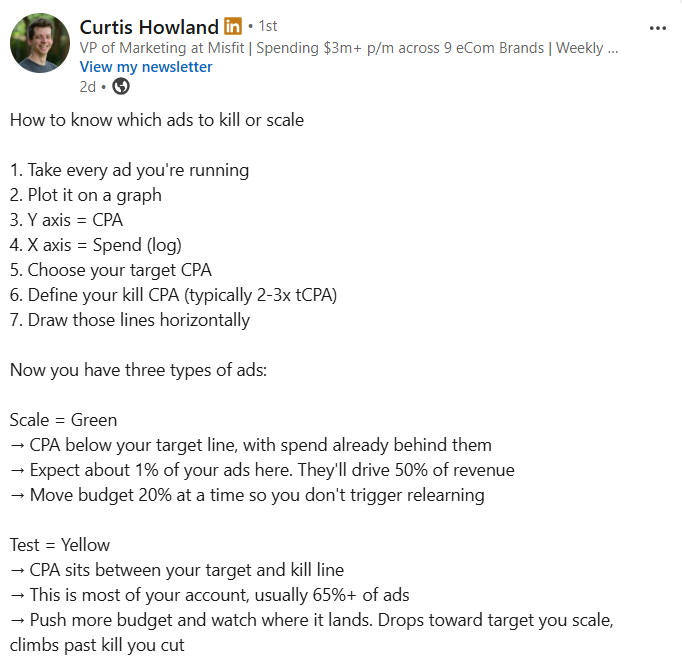
This framework replaces subjective ad decisions with a structured evaluation based on CPA and spend. Instead of reacting to short-term fluctuations, it categorizes ads according to how much data exists and how closely they are tracking against profitability targets. The goal is making scaling and pausing decisions with greater consistency.
Why it works: CPA alone is incomplete without enough spend behind it. Plotting performance against both efficiency and data volume helps distinguish proven winners, promising tests, and statistically unlikely recoveries. It encourages advertisers to scale gradually, continue testing where uncertainty exists, and remove ads only after sufficient evidence accumulates.
Where it needs balance: CPA thresholds should not be the only decision criteria. Different campaigns serve different objectives, and top-of-funnel or awareness creatives may justify higher acquisition costs if they contribute to downstream conversions. The strongest evaluation framework combines statistical confidence with an understanding of each campaign's role within the broader marketing funnel
🎥 Reel of the Day

What Works:
Relatable Timing - The joke lands because everyone recognizes the feeling. Closing time becomes a universal workplace moment that instantly connects with service industry audiences.
Visual Punchline - Instead of explaining the joke, the instant cut from cleaning to riding away delivers a visual payoff that viewers understand within seconds immediately.
Expectation Flip - Viewers expect the employee to finish cleaning. Instead, the second the clock hits five, he's already leaving, creating perfectly timed comedy.
Use universally relatable workplace moments, then exaggerate the final payoff visually to create instantly shareable comedy requiring almost no production budget.
Advertise with Us
Wanna put out your message in front of over 40,000 best marketers and decision makers?
Thanks for reading this edition! Keep pushing boundaries, testing ideas, and staying inspired. See you in the next edition with more ways to ignite your marketing success. 🥰