You’re already late for BFCM?
😲The BFCM inventory decision you are already late to make, and more!
Welcome to a space where every edition delivers insights, strategies, and inspiration to fuel your advertising brilliance. 🤯
😲The BFCM Inventory Decision You Are Already Late to Make
If you are reading this in June and have not placed your initial Q4 inventory order, you are not early. You are borderline. If you are planning to order in August, you are at the back of the factory queue before you have made a single purchasing decision. Here is the math that makes June the real deadline.
Late November: BFCM week
This is the destination. Your top SKUs need to be in the warehouse, allocated, and ready to ship. Work backward from here.
Early to mid-October: Paid spend scaling
BFCM is not a single week anymore. Most brands run early Black Friday campaigns through October and November. Creative and inventory need to be live before this window opens. Another step backward.
Late September: Inventory must arrive
Buffer for freight delays, customs clearance, and warehouse receiving. Another two to three weeks backward from early October.
July to August: Production completion
Supplier production lead times run 8 to 16 weeks for Q4 volume. Map 8 weeks back from late September and you land in late July. Map 16 weeks back and you land in early June. The brands ordering in August are scheduling production to complete in late November — the week they needed inventory to already be shipping.
June: The window that actually matters
Ordering in June puts you at the front of the production calendar, not the back.
It gives you the option to phase: an initial buy at conservative demand, a second order triggered by real early Q4 signals, pre-BFCM email performance, paid social CTR in October, first-week November sales velocity, rather than a forecast you made in summer.
The two bad outcomes the late order produces are both expensive. Over-order: BFCM sells 60% of inventory, January shows up with warehoused product and cash trapped in pallets.
Under-order: demand comes in at 3x forecast, top SKUs sell out Saturday afternoon, ads pause, and January is spent rebuilding algorithm learning instead of scaling.
The action for this week: identify your top 20% of SKUs by revenue, pull the lead time for each, and map backward from late November. The order deadline for each SKU is a specific date, not a general plan to get to it soon. For some SKUs, that date is already closer than you think.
Together with Omnisend
Your AI Knows What to Send. Omnisend Sends It.
You've got an AI that can talk strategy all day; what it can't do is open your email platform, pull live data, and build the campaign while you watch
Omnisend fixes that. Connect it to Claude or ChatGPT and your AI starts doing the actual work. Real segments, emails drafted and ready to review, zero copy-pasting
- See exactly what's driving revenue in your account by campaign, by segment, by send
- Find the automations and sequences you're missing and what they'd be worth if you turned them on
- Say "build it" and watch your AI create the segment, draft the email, and hand it back ready to send
150,000+ brands are already averaging $79 back for every $1 spent on this platform
Switching used to be the hard part. Omnisend migrates your lists, campaigns, and automations free in 5 days, so the only thing you're really deciding is how long you're okay leaving revenue on the table
Connect Omnisend and let your AI actually do something.
⚡Viral Organic Content Is One of the Fastest Sources of Proven Ad Concepts
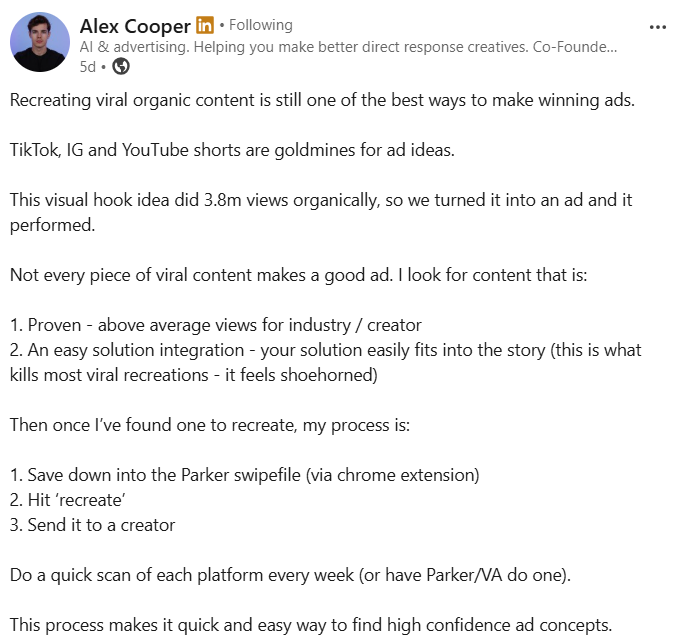
This framework treats social platforms as creative research engines rather than just distribution channels. Instead of inventing every ad from scratch, brands can identify organic content that has already captured attention and adapt its structure to fit their product naturally. The goal is borrowing proven attention, not copying blindly.
Why it works: Organic virality demonstrates that a hook, visual pattern, or storytelling format already resonates with real audiences. When the product integrates naturally into that narrative, brands reduce creative risk while accelerating concept testing and production.
Where it needs balance: High view counts alone do not guarantee advertising success. Many viral formats entertain without driving purchase intent, and forced product integration can feel inauthentic. The strongest approach adapts the underlying creative principle while ensuring the product is central to the story rather than an afterthought.
🎥 Reel of the Day
What Works:
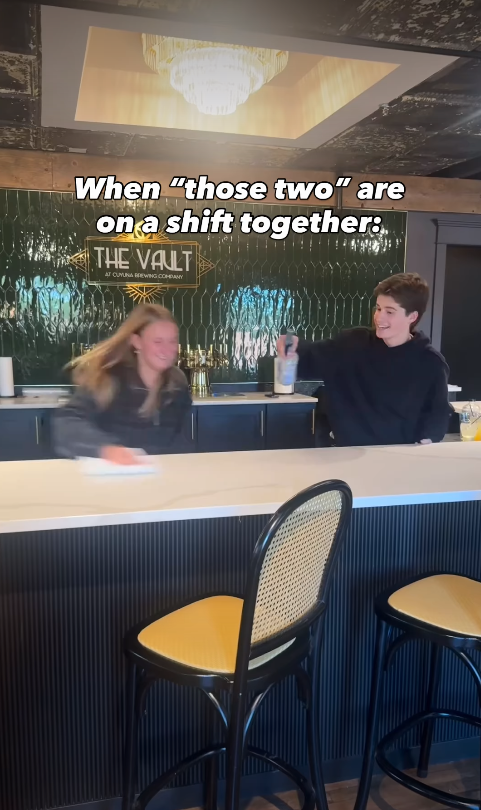
Workplace Chemistry - The reel sells personalities before products. Watching coworkers genuinely enjoy working together makes the venue feel somewhere customers want to spend time.
Controlled Chaos - The accidental broken glass becomes the funniest moment because perfection disappears. Small imperfections make branded content feel spontaneous, believable, and far more memorable.
Relatable Archetypes - Every workplace has "those two." The caption instantly triggers recognition, helping viewers project their own coworkers into the scene before anything happens.
Turn everyday workplace personalities into recurring characters, then let authentic unscripted moments become the entertainment customers associate with your brand consistently.
Advertise with Us
Wanna put out your message in front of over 40,000 best marketers and decision makers?
Thanks for reading this edition! Keep pushing boundaries, testing ideas, and staying inspired. See you in the next edition with more ways to ignite your marketing success. 🥰