Reallocate the budget you’re cutting
💰Forrester predicts a 30% display budget cut redirecting to CTV. Here's how to claim that reallocation with proof, not a trend line, Creative volume should follow creative understanding, and more!
Welcome to a space where every edition delivers insights, strategies, and inspiration to fuel your advertising brilliance. 🤯
💰 Reallocate the budget you’re cutting
Forrester's latest B2C prediction names a specific number: as consumers spend more time inside AI-generated summaries and chat interfaces instead of the open web, addressable audiences shrink and click-through rates fall with them.
The forecast is that leading advertisers respond by cutting display ad budgets by 30%, redirecting that spend toward entertainment-driven platforms, specifically connected TV, streaming audio and social video.
A prediction is not a guarantee, but the mechanism behind it is already visible in anyone's own display performance data.
The question worth asking now isn't whether to believe the forecast. It's whether your team has a plan for where that 30% actually goes if the trend continues, or whether it will get redistributed by whoever has the loudest pitch deck in the room when the decision gets made.
Model the reallocation before the number forces your hand
Pull your trailing display performance by placement and flag anything already showing declining click-through rate or rising CPM without a matching lift in conversion. That is the segment most exposed if the open-web audience shrink Forrester describes continues.
Size what 30% of that specific spend actually represents in dollars, not as a percentage of total budget. A number in dollars is what gets a reallocation plan taken seriously in a budget meeting. A percentage gets nodded at and forgotten.
Build the CTV case with outcome data, not just the trend
"Streaming is where attention is going" is true and also not enough to win a budget reallocation against three other channels making the same claim about their own share of the shift.
The stronger version of that argument pairs the attention trend with a measured outcome: incremental conversions per dollar on a CTV test relative to what the same dollars were producing on declining display placements.
That comparison is what a platform built to measure linear and streaming against downstream outcomes, rather than reach or impressions, actually produces. Tatari does that measurement for 300+ brands already making this exact reallocation, and a demo walks through how the incremental read gets built.
Run the shift as a test, not a wholesale move
Move a defined slice of the exposed display budget into CTV for one cycle, holding the rest steady as a comparison point rather than moving everything at once on a forecast.
A prediction naming a specific percentage is a useful planning input. It is not a substitute for your own incremental read on whether the reallocation actually performs, and running it as a controlled test is how you get that read before the rest of the budget follows.
Together with Insense
Meta Just Broke Your Look-Alike Ads. Here's the Fix.
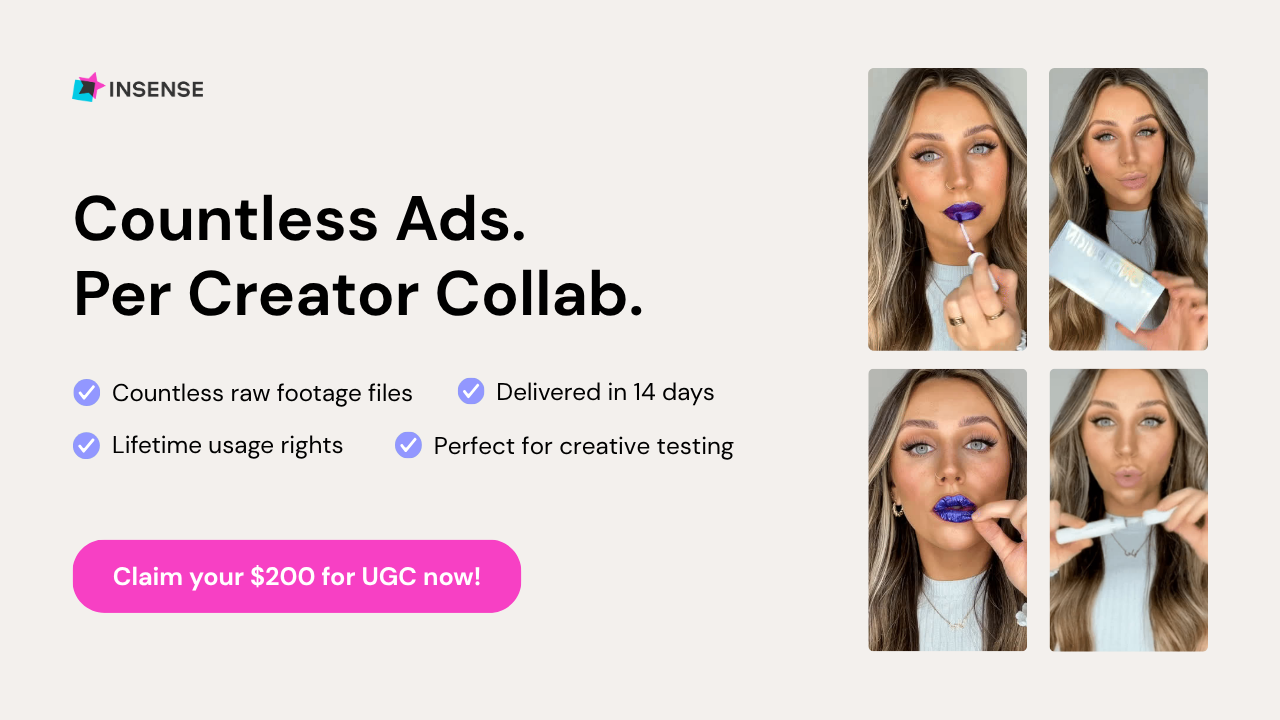
Meta’s new Andromeda update is silently killing look-alike ads before they even enter the auction. If your creatives share too many visual cues, your ads collapse overnight.
With Insense, each collab gives you a full bank of raw footage you can mix, match, and turn into multiple scroll-stopping ads. One creator can fuel an entire round of testing without draining your team’s bandwidth.
- 20+ raw assets per creator you can spin into countless variations.
- Fast 14-day turnaround so you stay ahead
- Lifetime usage rights, so every winning asset keeps paying off.
Over 3500+ brands and agencies are already scaling 3× faster with 40% lower fatigue rates using Insense’s modular system.
Cost-effective UGC with lifetime usage rights? Yes please!!
Book a free strategy call by August 28 and get $200 for your first campaign.
⚡ Creative volume should follow creative understanding
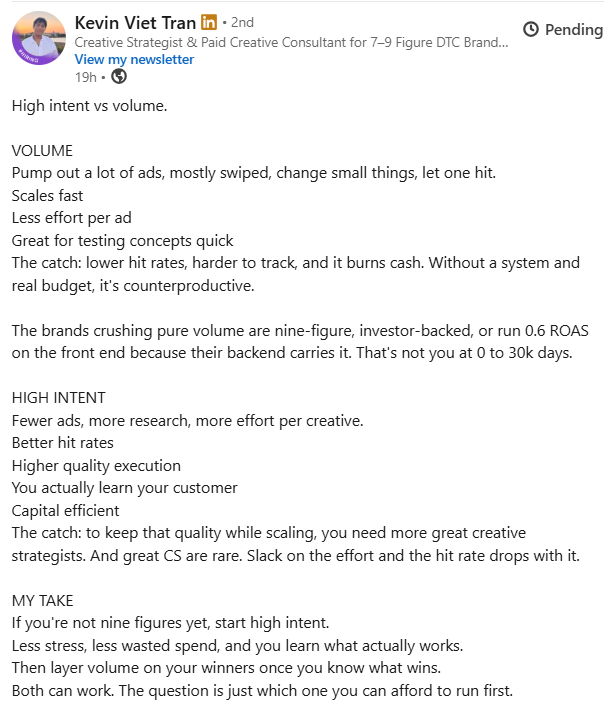
This framework compares two approaches to ad production: high-volume testing versus fewer, research-heavy creatives. For brands with limited budgets, high-intent creative can provide a more capital-efficient way to discover what actually resonates before increasing production.
Why it works: Deeper research and stronger execution can improve hit rates while teaching teams which customers, angles, and messages drive performance. Once those patterns emerge, volume can be layered onto proven ideas instead of funding dozens of guesses.
Where it needs balance: High intent doesn't automatically outperform volume, and large budgets aren't the only reason volume works. The right approach depends on production costs, testing budget, creative talent, and speed. Many brands benefit from combining both rather than choosing one permanently.
🎥 Reel of the Day
What Works:
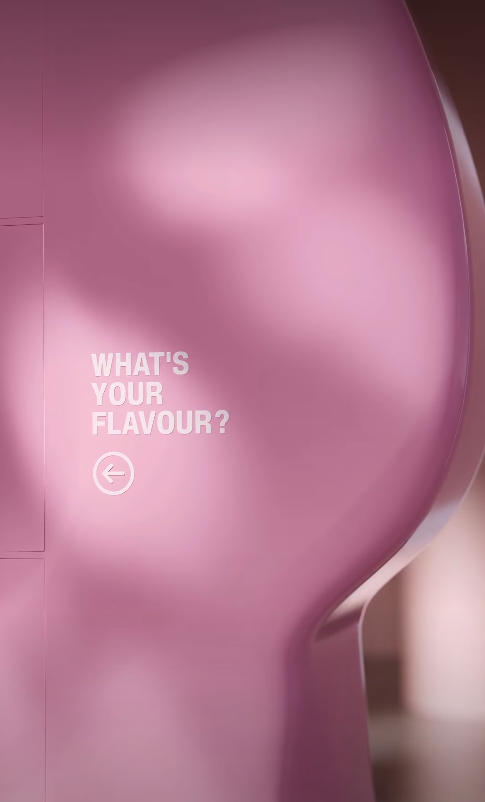
1. The world sells the collab - Instead of simply placing beauty products beside candy, H&M Beauty builds an entire pink candy-shop universe around the BUBS collaboration. The environment makes the partnership instantly understandable.
2. Discovery drives retention - “What’s your flavour?” turns the giant character-shaped cabinet into something viewers want to explore. Opening different compartments creates repeated mini reveals that naturally keep people watching.
3. The finale adds spectacle - Ending with candy and products tumbling onto the floor gives the Reel its biggest visual payoff. It escalates from polished product discovery into controlled chaos, making the final seconds memorable.
Build a world around the product, then let viewers discover it. A strong themed environment can turn an ordinary collection reveal into an experience people keep watching to explore.
Advertise with Us
Wanna put out your message in front of over 40,000 best marketers and decision makers?
Thanks for reading this edition! Keep pushing boundaries, testing ideas, and staying inspired. See you in the next edition with more ways to ignite your marketing success. 🥰