You’re measuring warmup wrong
⏱️ "Never migrate before peak" is protecting you from the wrong risk if you're measuring the wrong warm-up clock, Low-ROAS ads may still support the customer journey, and more!
Welcome to a space where every edition delivers insights, strategies, and inspiration to fuel your advertising brilliance. 🤯
⏱️ You’re measuring warm-up wrong
New sending infrastructure, a new IP range, or a new platform's shared sending domain doesn't get trusted by Gmail and Yahoo on day one.
It needs a warm-up period, a gradual volume ramp that builds sender reputation before a mailbox provider delivers to the inbox instead of routing a chunk to spam. Skip or rush that ramp, and the first big send underperforms exactly when it can't afford to.
That mechanic is why platform migrations get treated as a fourth-quarter no-go by so many teams. The fear isn't wrong, rushed warm-up genuinely tanks deliverability, but the conclusion usually is.
The real constraint isn't whether to migrate before peak. It's whether the warm-up fits inside the calendar you actually have.
Calculate your real warm-up runway, working backward from your first big send
Identify the date of your first high-volume BFCM campaign, then count backward the days a proper warm-up ramp requires for your list size.
For most mid-sized lists, that's measured in weeks, not days, with volume increasing gradually rather than jumping straight to full send.
If that math puts your required start date in the past, migrating now is genuinely too late for this cycle. If it lands with runway to spare, the "never migrate before peak" rule is protecting you from a risk a properly timed switch doesn't actually carry.
Separate migration speed from warm-up speed
These are two different clocks, and conflating them is where the fear comes from. How fast your data and automations move to a new platform is a technical question.
How fast the new platform can send at full volume without hurting deliverability is a separate reputation question no migration speed can shortcut.
A fast technical migration paired with a properly paced warm-up gets you to peak-ready faster than a slow migration that also rushes the ramp.
Confirm which clock a platform's stated timeline actually describes before assuming it covers both.
Weigh the migration risk against the risk of staying
A platform actively slowing execution or draining budget carries its own risk into peak season, one that compounds every week you wait rather than resetting like a warm-up clock does.
One agency ran this calculation and migrated a client to Omnisend in the weeks before Black Friday, completing the switch in under five business days and landing $113K in holiday revenue, matching the year before.
More than 150,000 ecommerce brands are already on the platform, part of why the warm-up math worked in that window. You can read the full story here.
The rule against migrating before peak isn't wrong. It's just measuring the wrong clock.
Together with Insense
1 UGC creator = 20+ ad variations to scale your Q4 creatives
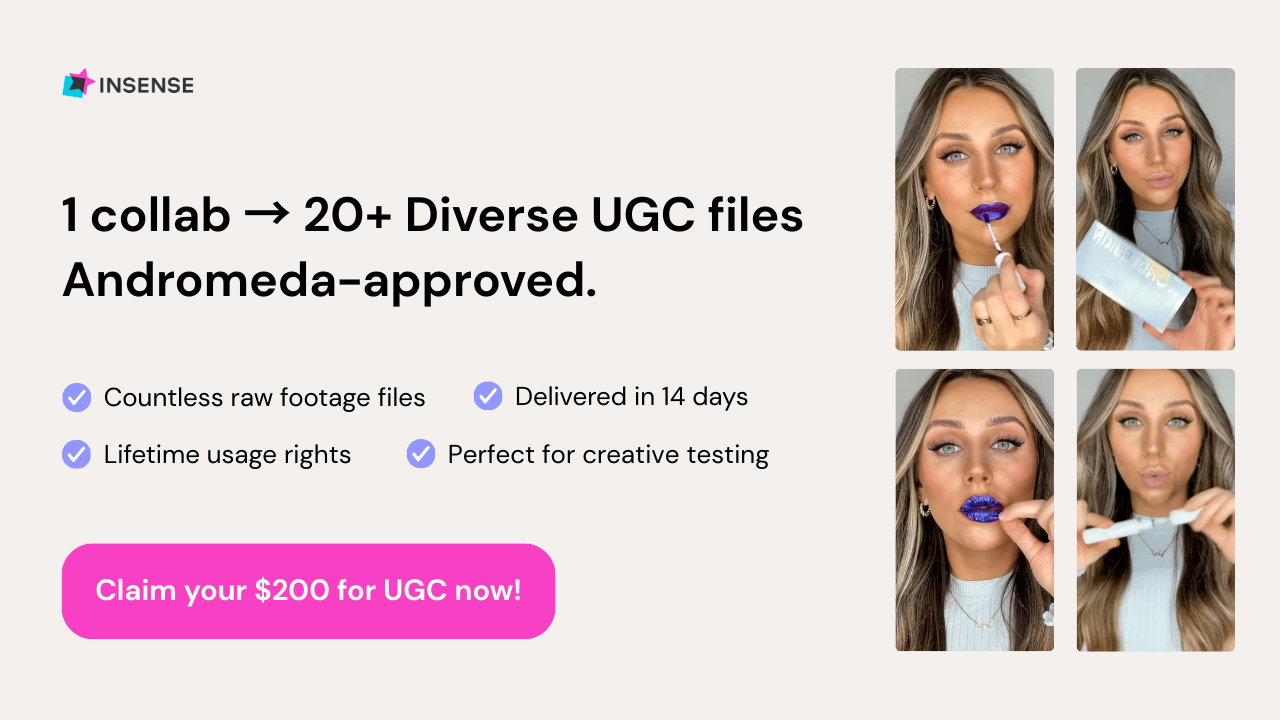
Insense makes UGC ads insanely cost-effective - and Andromeda-approved!
Meta's Andromeda update now rewards creative diversity (+22% ROAS), so the more distinct hooks and angles you test, the better you rank.
From one brief, get numerous raw footage clips to mix, match, and turn into multiple scroll-stopping creatives for your paid social ads.
Source 20+ pieces of raw content (per creator) with lifetime usage rights, all delivered in 14 days or less.
Here's the Q4 math: one winning ad takes 10–13 tested creatives, so 20+ variations per creator means more shots at a winner, and instant hook-swaps when an ad fatigues during BFCM week. Many versions from one shoot, not 50 shoots.
That’s how over 3,500 brands like Beauty Pie, Il Makiage, Revolut, and Monster Energy scale UGC without killing team bandwidth.
Cost-effective UGC with lifetime usage rights? Yes please!!
Book a free strategy call by August 28 and get $200 for your first campaign.
⚡Low-ROAS ads may still support the customer journey
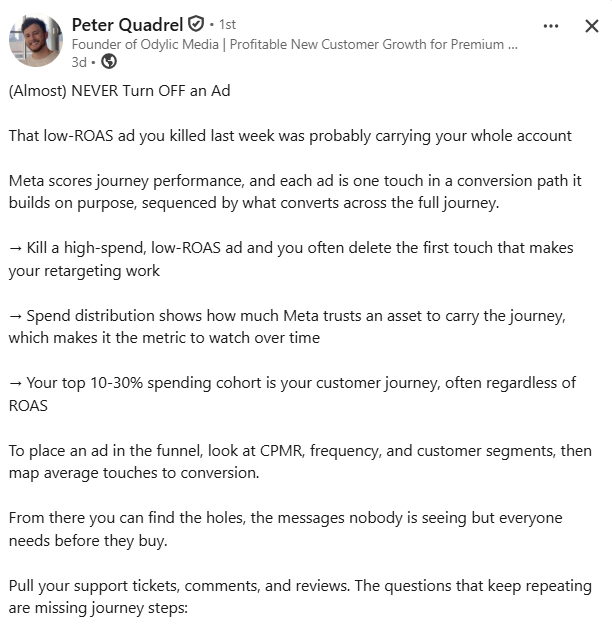
This framework argues that judging every Meta ad by its individual ROAS can lead to premature cuts. Some high-spend creatives may introduce customers, answer objections, or create demand that later converts through another ad.
Why it works: Looking at spend distribution, frequency, audience segments, and recurring customer objections can reveal the role different creatives play. Building ads around missing questions can create a more complete journey instead of forcing every asset to close the sale.
Where it needs balance: A low-ROAS ad isn't automatically an important assist, and high spend doesn't prove incrementality. Meta's delivery signals can provide clues, but marketers still need controlled testing and broader business metrics before assuming an underperforming ad should stay live.
🎥 Reel of the day
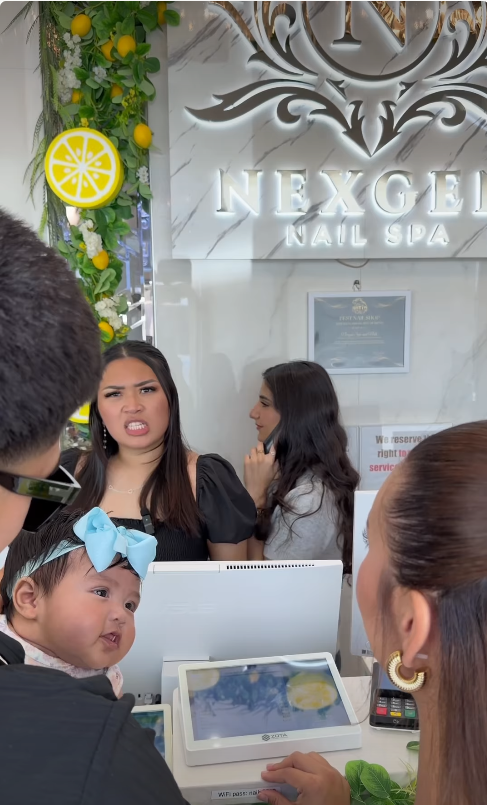
What Works:
Immediate Social Tension - “POV: first time here” creates instant curiosity because viewers know something is off. The receptionist’s reaction and repeated boyfriend reveals build a simple joke viewers understand without explanation.
Escalation Drives Retention - The reel keeps replacing the boyfriend with a completely different guy, turning one awkward interaction into an escalating running gag. Each reveal resets attention and strengthens the completion rate.
Branding Never Interrupts - The salon logo dominates the background naturally in almost every shot, so brand recall builds without needing product mentions. Viewers absorb NexGen repeatedly while staying focused on the joke
Take one relatable customer situation, establish a predictable setup, then change one visual detail every few seconds. The audience starts hunting for the next variation, lifting retention and replay.
Advertise with Us
Wanna put out your message in front of over 40,000 best marketers and decision makers?
Thanks for reading this edition! Keep pushing boundaries, testing ideas, and staying inspired. See you in the next edition with more ways to ignite your marketing success. 🥰